Sometimes, being an electrician means working outside in the cold and rain, dealing with muddy ground, awkward cable routes and challenging installations.
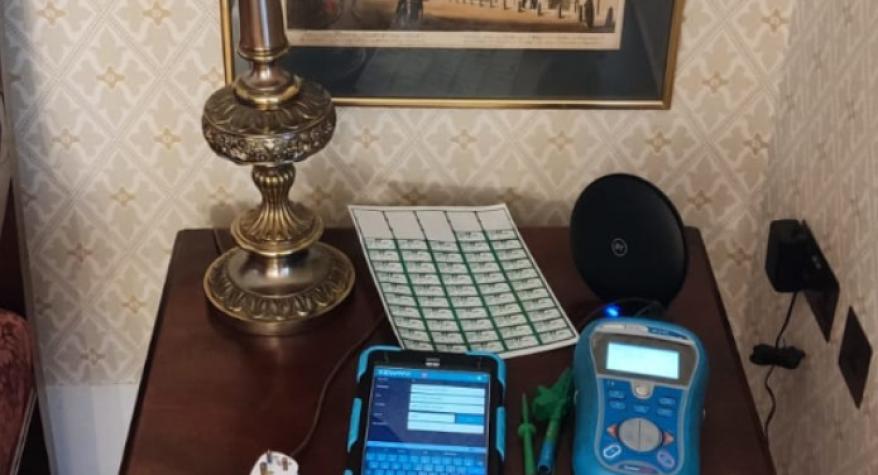
Other times, it means spending a day in a warm, comfortable hotel, walking from room to room and checking electrical appliances.
After the kind of week I'd just had, I certainly wasn't complaining about the second option!
Recently, I carried out Portable Appliance Testing (PAT testing) at a hotel in Reading, and although it's quite different from my usual electrical installation work, it turned out to be a pleasant change of pace. More importantly, it was another good reminder of why regular electrical equipment inspections are worth doing.
A Nice Change After a Week of Outdoor Electrical Work
Over the past few weeks, I've been involved in several outdoor electrical projects, including electrical installations for garden buildings, outdoor lighting and power supplies.
Some of these jobs have been quite physically demanding, especially with the recent weather. Working outside in the UK during autumn can be unpredictable. One minute it's dry, and the next you're trying to keep your tools and electrical equipment protected from the rain.
I've spent plenty of time recently working in cold, wet conditions, sometimes in quite confined spaces where even moving around with tools can be difficult.
Of course, that's all part of the job, and I do enjoy the challenge of electrical installation work. But after a particularly demanding week, it was rather nice to arrive at a clean, warm hotel in Reading and know that I'd be spending the day indoors.
No muddy boots, no rain dripping from the trees and no struggling to find somewhere dry to put my tools!
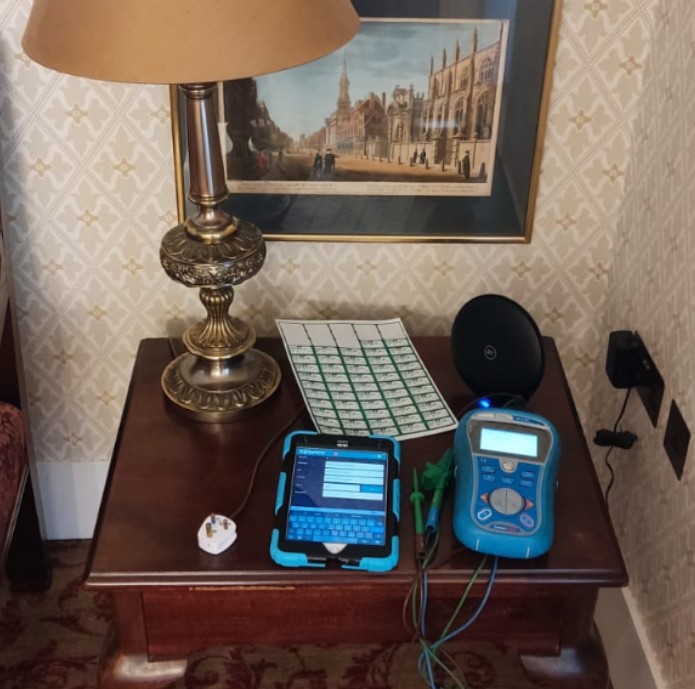
Just my PAT testing equipment, a list of appliances to inspect and plenty of hotel rooms to work through.
Room by Room: What PAT Testing at a Hotel Involves
PAT testing can be a little repetitive, especially in a hotel where many rooms contain similar electrical appliances.
You might find yourself inspecting the same types of equipment over and over again, including kettles, irons, hairdryers, lamps and other portable electrical items.
But that's also what makes the process quite straightforward once you get into a rhythm.
For each appliance, I start with a visual inspection, checking the condition of the plug, flexible cable, appliance casing and any visible signs of damage or overheating.
Where appropriate, I then carry out electrical tests using a PAT tester to check that the appliance meets the relevant safety requirements.
It's not simply a matter of plugging something into a testing machine and sticking a label on it. The visual inspection is an important part of the process, and sometimes it reveals problems that electrical testing alone might not identify.
As I worked my way through the hotel rooms, I was pleased to see that the vast majority of electrical appliances were in very good condition.
This is always encouraging, particularly in a hotel where electrical equipment is used regularly by different guests.
However, not everything passed the inspection.
One Damaged Iron That Shows Why PAT Testing Matters
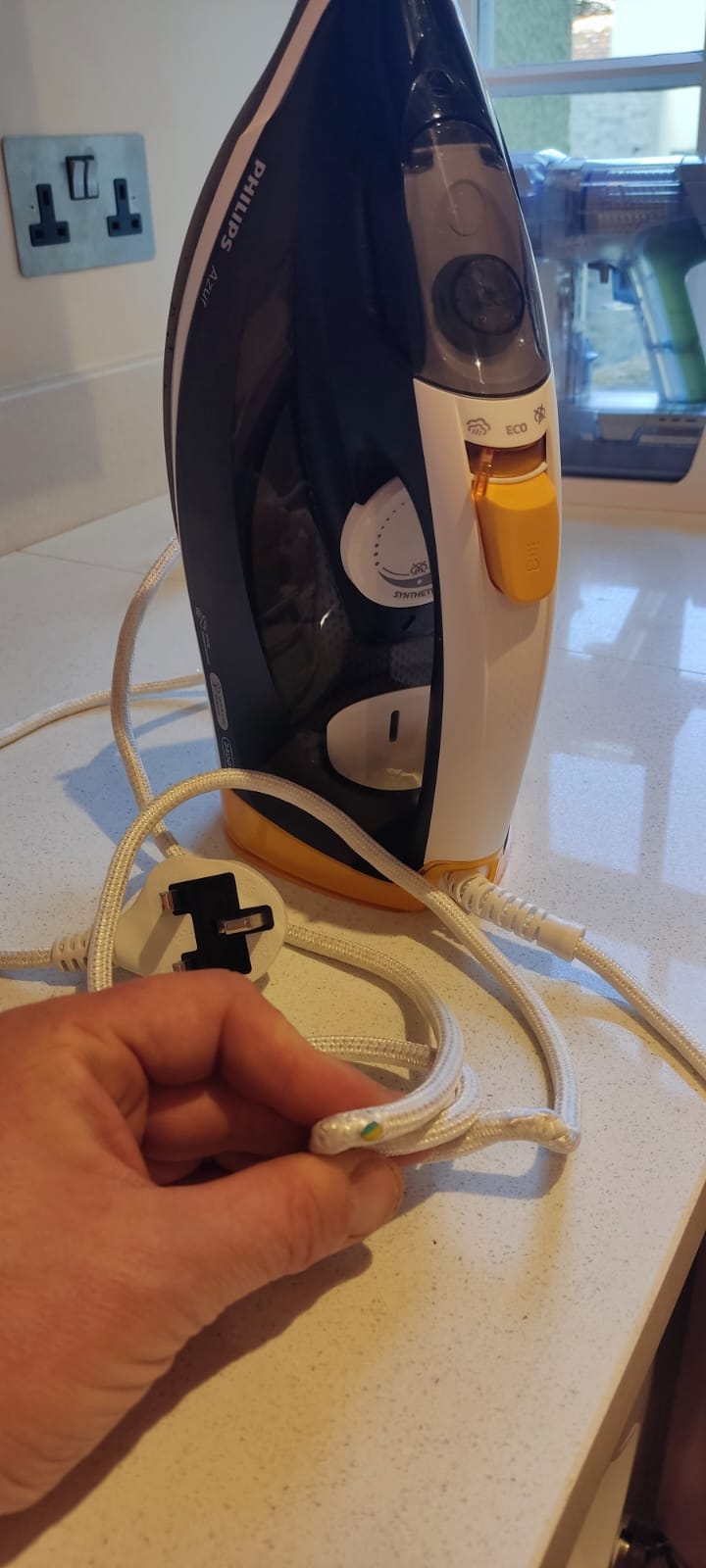
One of the appliances I came across was an electric iron with a damaged flexible cable.
The cable had clearly been twisted repeatedly, probably through everyday use, storage or being wrapped around the iron.
Over time, this had caused damage to the outer protective sheath, and the basic insulation around the internal conductors was beginning to become visible.
This might not sound particularly serious at first, especially if the iron still switches on and heats up normally.
But it is exactly the sort of defect that shouldn't be ignored.
The outer sheath of a flexible cable provides mechanical protection to the insulated conductors inside. Once that protection becomes damaged, the internal insulation can become more vulnerable to further wear, bending and eventual failure.
If the damage continues, there is a potential risk of electric shock or a short circuit.
In this particular case, I recorded the iron as a failed item because of the cable damage.
And that's really the point of PAT testing. An appliance doesn't have to stop working to become unsafe.
Something can appear perfectly functional while already showing signs of deterioration that could eventually lead to a dangerous situation.
Why Hotels Need to Pay Attention to Electrical Appliance Safety
Hotels are an interesting environment when it comes to electrical safety.
Unlike appliances in our own homes, hotel equipment may be handled by many different people, often several times a week.
Guests use kettles, irons, hairdryers and other equipment, while housekeeping staff regularly move, clean and store these items.
Over time, cables can become twisted, plugs can get damaged and appliances can develop signs of wear.
Most of these issues are not caused by anyone doing something particularly wrong. They're simply the result of regular use.
That's why routine inspections are useful.
It's also worth mentioning that PAT testing itself is not automatically an annual legal requirement for every appliance. The important thing is that electrical equipment is maintained in a safe condition, with inspection and testing intervals based on the type of equipment, how it is used and the environment.
For a hotel, where equipment is regularly handled by guests and staff, having a sensible inspection and maintenance programme is particularly important.
If you manage a hotel, guesthouse, office or other commercial property in Reading or the surrounding areas, it's worth reviewing when your electrical equipment was last inspected and whether your current testing arrangements are suitable.
PAT Testing Isn't Just About Passing or Failing
One thing I've noticed over the years is that people sometimes see PAT testing as simply another box that needs ticking.
An electrician arrives, tests a number of appliances, puts labels on them and provides a report.
But there is more to it than that.
A good inspection can identify early signs of damage before they develop into something more serious.
Sometimes it's a damaged plug. Sometimes it's a loose cable connection, a cracked appliance casing or signs of overheating.
And sometimes, as with the iron I found during this visit, it's a flexible cable that has been twisted and damaged through repeated use.
The majority of equipment may pass without any problems, but finding even one potentially hazardous appliance makes the inspection worthwhile.
It's also important that any failed equipment is taken out of use until it has been properly repaired or replaced.
A Productive Day and a Welcome Break from the Rain
By the end of the visit, I'd worked my way through the electrical appliances, completed the necessary inspections and testing, and identified the items that required attention.
Overall, the hotel's electrical equipment was in very good condition, which was nice to see.
And on a personal note, I quite enjoyed the change of scenery.
PAT testing might not be the most exciting part of electrical work. After inspecting a long series of similar appliances, it can certainly become a little repetitive!
But after spending so much time recently working outside in the rain and cold, walking around a warm, comfortable hotel felt almost like a little break.
Of course, I was still working, concentrating on the inspections and making sure everything was checked properly. But it was definitely easier on the body than some of the outdoor installations I'd been dealing with!
It's one of the things I like about being an electrician. No two weeks are quite the same.
One week I might be installing an electrical supply to a garden building, working with armoured cables and consumer units. The next, I might be inspecting electrical appliances in a hotel or carrying out an electrical safety inspection at someone's home.
Different environments, different challenges, but the same responsibility to make sure electrical installations and equipment are safe.
And if there's one thing this particular PAT testing visit reminded me of, it's that even something as ordinary as a hotel iron deserves a proper safety check.
A small defect in a cable might be easy to overlook during everyday use, but identifying it early can help prevent a much bigger problem later.
At IGT Electrical Ltd, we carry out PAT testing for hotels, offices, landlords and other businesses across Reading, Wokingham, Bracknell and surrounding areas.
If you're responsible for electrical equipment in a commercial property and aren't sure whether it's due for inspection, we're always happy to help you work out a sensible approach to keeping it safe. Get in touch today!