
Kitchen renovations often involve much more than choosing new cabinets, worktops and appliances.
Sometimes, before any of the exciting work can begin, there are a few important things that need moving out of the way.
And occasionally, one of those things happens to be the entire electrical supply arrangement!
This week, I've been working on an interesting electrical project in Burghfield, just outside Reading, where the customer is preparing for a major kitchen renovation. Part of the work involves removing an existing wall, but unfortunately, that wall is also home to the property's main electrical equipment.
That includes the electricity supplier's main cut-out fuse, electricity meter and the existing fuse box, all squeezed into a relatively small cupboard off the hallway.
Obviously, removing the wall isn't quite as simple as knocking it down when all that electrical equipment is attached to it!
A Project That Started Back in July
I originally visited the property towards the end of July to discuss the proposed work and prepare a quotation.
At the time, we went through the options for relocating the electrical equipment and how this could be coordinated with the planned renovation.
The customer got back in touch about a month ago to confirm they wanted to go ahead.
By then, we needed to start putting the different stages of the project together, because this wasn't going to be a straightforward fuse box replacement.
The existing electricity supply enters the property through the main service cable, which connects to the supplier's cut-out fuse. From there, electricity passes through the meter and eventually supplies the consumer unit, commonly known as the fuse box.
In this case, all three needed to be relocated, although not all by the same contractor.
Three Different Parties, One Electrical Supply
One of the more challenging aspects of this project is coordinating the work between three separate parties.
SSE, the local electricity distribution network operator, is responsible for relocating the incoming electricity service cable and main cut-out to the new external meter box.
The customer's electricity meter operator also needs to attend to relocate and reconnect the meter. And my responsibility is to relocate and upgrade the property's fuse box, prepare the new electrical connections and ensure the installation is ready for the supply to be transferred.
The important part is that the final stages need to happen in the correct order, ideally on the same day.
The supply needs to be disconnected, the service equipment relocated, the meter reconnected and the new installation connected and tested before everything can return to normal operation.
It's the sort of job where planning and communication are just as important as the electrical work itself.
Moving the Fuse Box into the Front Porch
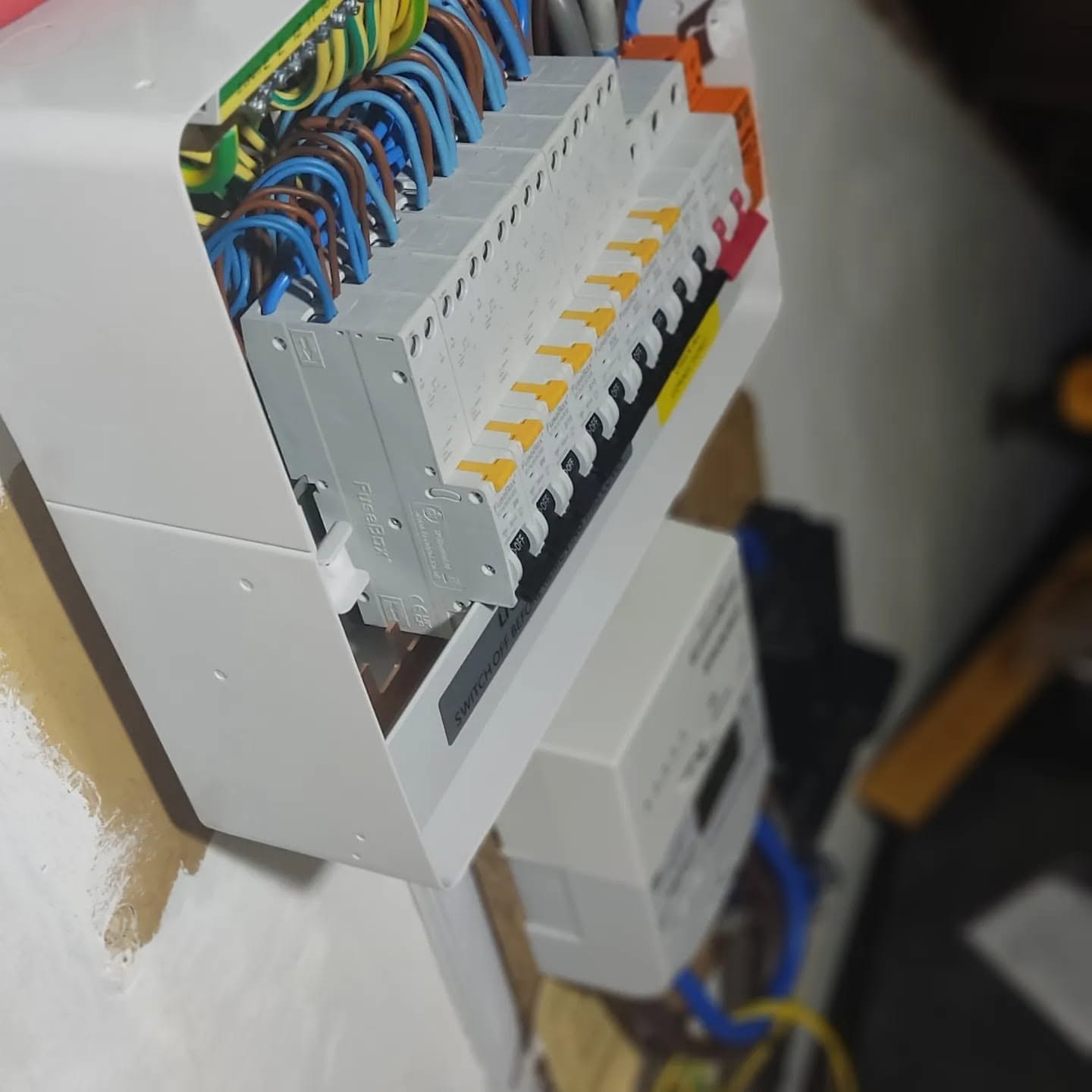
The first stage of my work was to relocate the existing fuse box approximately 2.5 metres from its original position into the front porch, just inside the main entrance.
Rather than simply moving the old unit, we decided to upgrade it at the same time.
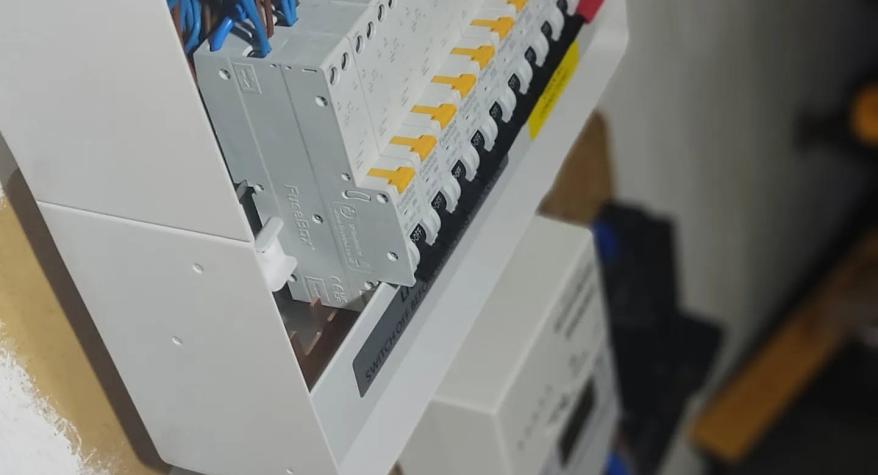
The new installation includes a modern metal consumer unit fitted with individual Type A RCBO protection and a surge protection device (SPD).
RCBOs provide both overload and short-circuit protection, as well as additional protection against earth leakage faults on individual circuits.
This means that if a fault develops on one circuit, it doesn't necessarily affect the rest of the installation.
The SPD provides protection against certain transient voltage surges, which can potentially damage sensitive electronic equipment around the home.
With the fuse box being relocated anyway, it made sense to take the opportunity to bring the distribution equipment up to a modern standard.
Making Use of the Existing Cable Routes
One of the biggest questions before starting was whether the existing circuit cables would be long enough to reach the new fuse box location.
Fortunately, we managed to make use of an existing service cavity around the waste pipe, which provided a suitable route for much of the wiring.
This was particularly helpful because it meant we could avoid unnecessary disruption to the property.
Most of the existing cables had enough length to reach the new position, although a few circuits needed to be extended using suitable connections.
As with any fuse box relocation, it's important that cable extensions are properly made, accessible where required or use appropriate maintenance-free connections, and that the completed circuits are tested.
If you're planning a renovation and need to move your fuse box in Burghfield, Reading or the surrounding areas, it's always worth getting advice early. Sometimes the existing wiring can be reused, which can make a significant difference to the amount of work involved.
Preparing the New Armoured Supply Cable
Another important part of today's work was preparing the new supply cable between the relocated fuse box and the external meter position.
For this installation, I've run a 25mm² three-core steel wire armoured cable (SWA).
The cable runs from the new fuse box position, through a small attic space and towards the external meter box.
SWA cable is particularly useful where additional mechanical protection is required, and it provides a robust solution for this type of installation when correctly selected and installed.
The cable has been routed into position but deliberately left disconnected until the supply relocation takes place.
For now, the property is being supplied through a temporary arrangement using the existing main isolator, allowing the customer to continue using their electricity until the next stage.
This temporary arrangement will be removed as part of the planned supply changeover.
Tomorrow Is the Important Day!
With the new fuse box installed and the main cable prepared, the first stage of my work is complete.
Tomorrow, SSE is scheduled to attend and relocate the incoming electrical service into the new external meter box.
The meter operator will also need to complete their part of the work.
Once that's done, I'll return in the afternoon to make the final connections to the new supply arrangement and carry out the necessary electrical testing.
There is still one small challenge I'm keeping an eye on: making sure there's enough space in the new meter box arrangement for the main isolator and associated connections.
It's something that needs to be checked carefully because, as electricians know, what looks like plenty of space on paper can suddenly become rather tight once all the cables and equipment are in position!
Hopefully, everything will go according to plan.
Why Fuse Box Relocation Needs Careful Planning
This project is a good example of why electrical work should be considered early in any major renovation.
Moving a fuse box isn't simply a matter of disconnecting a few cables and fixing it somewhere else.
You need to consider the existing cable lengths, suitable routes, accessibility, protective devices, earthing arrangements and how the installation will be supplied during the work.
When the incoming electricity supply and meter also need relocating, coordination with the relevant electricity network operator and meter operator becomes essential.
There can be quite a lot happening behind the scenes before the builders can even start removing the wall.
For me, these are interesting projects because they involve a combination of practical installation work, problem-solving and planning.
And although today's work was quite demanding, it's satisfying to see the new fuse box neatly installed in its new position, with the wiring prepared for the next stage.
Once the supply relocation is completed, the customer will be one step closer to starting their kitchen renovation without the old electrical equipment getting in the way.
At IGT Electrical Ltd, we carry out fuse box upgrades, consumer unit relocations and electrical alterations for renovation projects across Burghfield, Reading, Wokingham and surrounding areas.
If you're planning a kitchen extension, renovation or other building work that involves moving electrical equipment, feel free to get in touch. We're happy to discuss the options and help plan the electrical work before the building project gets underway.