Sometimes the simplest electrical upgrades make the biggest difference to everyday life. This recent project in Lower Earley, Reading wasn't about installing the latest smart technology or carrying out a full rewire. Instead, it was about making an older family home safer, more practical and better suited to the way we use electricity today.
The property was a large detached house owned by an elderly couple. Like many homes built several decades ago, it had been designed at a time when people owned far fewer electrical appliances. Most rooms only had one or two single sockets, which would have been perfectly adequate years ago. Today, however, we all rely on televisions, broadband routers, mobile phone chargers, laptops, lamps, speakers and many other electrical devices that all need power at the same time.
When I first visited the property, I noticed that extension leads and multi-way adaptors had gradually become part of everyday life. I explained to the homeowners that although extension leads have their place, using them as a permanent solution isn't ideal. Where possible, installing additional sockets provides a much safer, tidier and more convenient solution.
Looking Beyond the Immediate Problem
Rather than simply replacing one or two sockets, we walked around the property together and discussed how each room was actually being used.
One area that really stood out was the hallway. Although it only had a single double socket, there were numerous appliances plugged into it using extension leads and multi-way adaptors. The homeowners were powering an air purifier, broadband equipment, telephone chargers, USB chargers, table lamps, a standing lamp, timer plugs, speakers and several other everyday electrical devices from that single point.
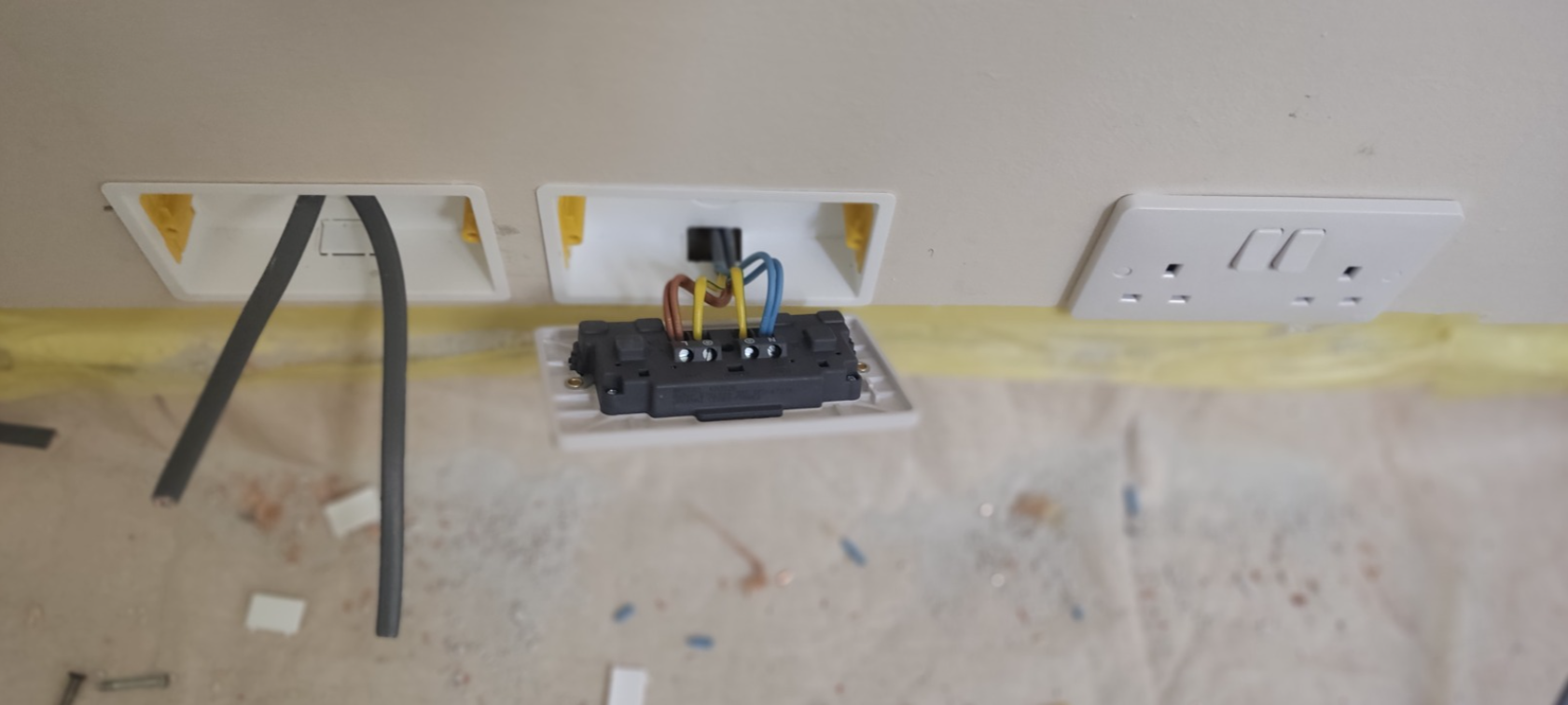
It quickly became clear that replacing the existing socket alone would not solve the problem. Instead, we decided to install three additional double sockets in that area. This increased the total from one double socket to four double sockets, giving the hallway eight usable outlets.
The difference was immediate. The extension leads could be removed, cables became much tidier, and every appliance now had its own properly installed socket. Not only did this improve the appearance of the hallway, but it also reduced the reliance on multi-way adaptors, making the installation safer and much more convenient.
After looking at the rest of the property, we followed the same approach in other rooms, converting almost every existing single socket into a double socket and installing additional double sockets where they would genuinely improve everyday living.
If you're relying on extension leads around your home, it may be time to consider installing additional sockets instead. Call me on 0118 430 0038 and I'll be happy to discuss the best solution for your property.
Working Carefully in an Older Property
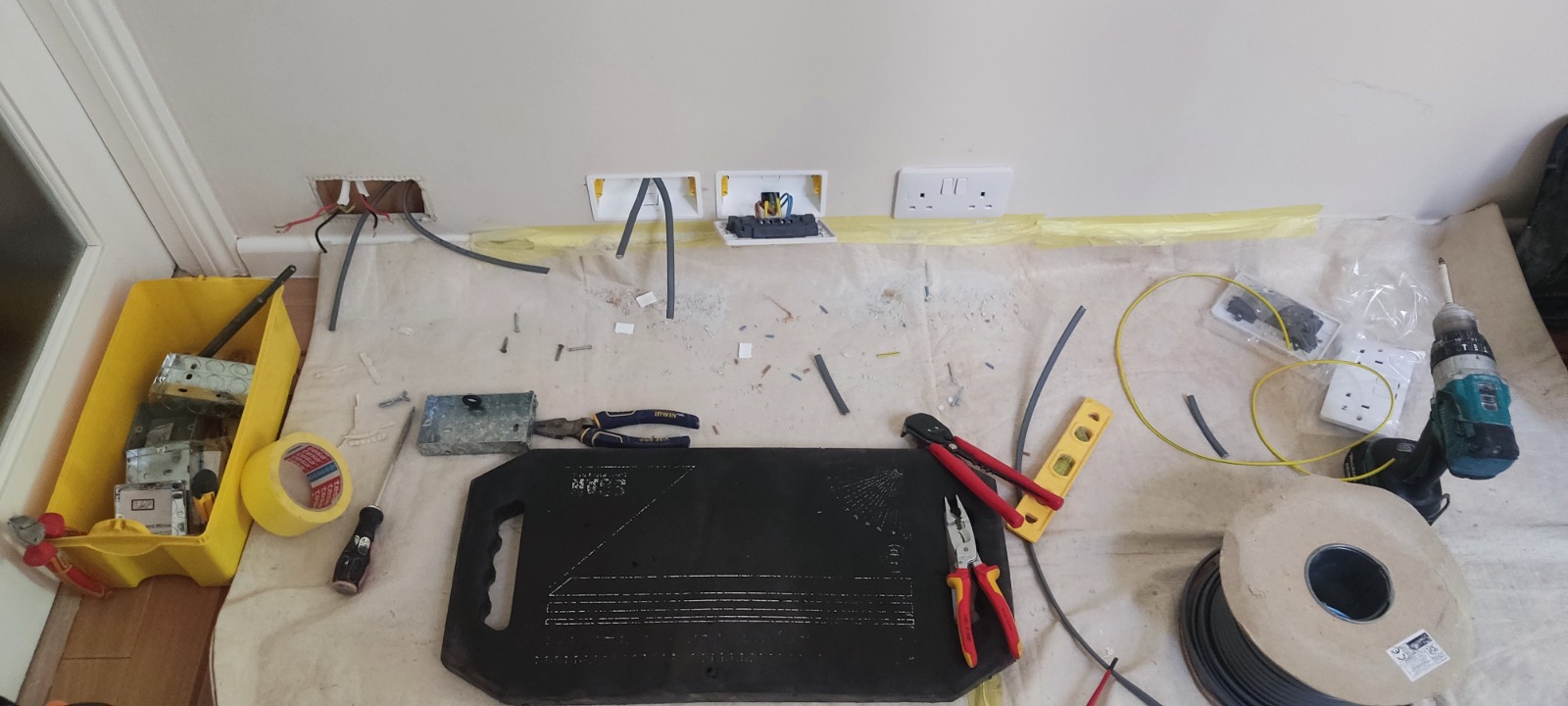
Most of the existing sockets in this house were installed in solid brick walls, which makes this type of work much more involved than many people realise.
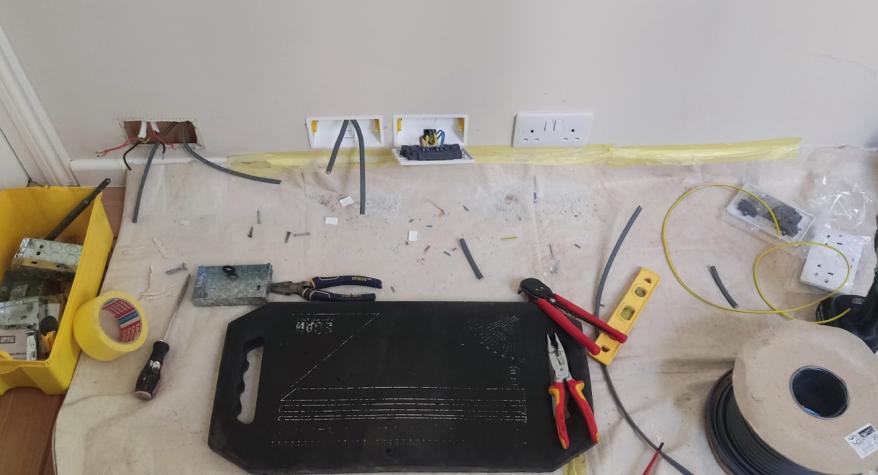
To convert a single socket into a double socket, the existing opening has to be carefully enlarged because a double back box is significantly wider. This involves cutting the surrounding brickwork accurately while taking care not to damage the surrounding plaster.
Naturally, this creates some dust and can look a little untidy while the work is in progress, but accuracy is important. Once each new back box was securely fitted, I carefully filled around the edges so that no unnecessary gaps or cracks were left behind.
The homeowners had already planned to redecorate parts of the house afterwards, so they weren't too concerned about the cosmetic side. Even so, I always like to leave every installation as neat and tidy as possible before I leave.
Working Through the Summer Heat
This project was completed during one of the hottest weeks of the summer.
Originally, I had planned to complete everything in a single day, but after seeing both the amount of work involved and the high temperatures, I decided it would be much better to split the installation over two days.
That allowed me to keep the same attention to detail throughout the project without rushing towards the end of a long day. It also meant I could keep the quality of workmanship exactly where I wanted it.
The homeowners were incredibly kind throughout the installation, regularly bringing me cold water and refreshments to help keep me going during the heatwave. Those thoughtful gestures were greatly appreciated and made the project even more enjoyable.
Why Additional Sockets Make Sense in Older Homes
One thing I regularly find in older homes around Reading and Lower Earley is that the original electrical installation simply wasn't designed for modern living.
Years ago, one or two sockets in each room were usually enough. Today, even a single room may have a television, broadband router, phone chargers, laptop chargers, lamps, smart speakers and other equipment all needing power.
Instead of relying on extension leads or multiple plug adaptors, installing additional sockets provides a much safer and more practical long-term solution. It also improves the appearance of the room by reducing visible cables and making furniture layouts much easier.
Attention to Detail from Start to Finish
Although changing sockets might sound like a relatively straightforward job, achieving a professional finish takes time and care.
Every new socket was installed level, every connection was checked carefully, and once the work had been completed, I tested the circuits to make sure everything was operating correctly and safely.
One of the most satisfying parts of this project was seeing how much easier the home became to use. Instead of constantly unplugging one appliance to use another, the homeowners now have convenient access to power exactly where they need it.
Sometimes the best electrical improvements are not the most complicated ones. They are simply the ones that make everyday life safer, easier and more comfortable.
If you're thinking about adding extra sockets or converting single sockets into doubles in your home, I'd be happy to help.
I carry out this type of work throughout Lower Earley, Reading and the surrounding areas. Call me on 0118 430 0038 for friendly advice and a free quotation.